When choosing a hydrogen water bottle, most people compare hydrogen concentration, battery life, cycle time or design. But one of the most important factors is often overlooked: the material used to make the bottle.
Hydrogen water bottles are not ordinary drink bottles. During electrolysis, molecular hydrogen gas is generated inside the bottle before dissolving into the water. This creates internal pressure, making the material of the water chamber especially important.
The right material must be safe for drinking water, durable enough for everyday use and capable of supporting pressure-based hydrogen generation. It should also resist cracking, shattering and deterioration over time.
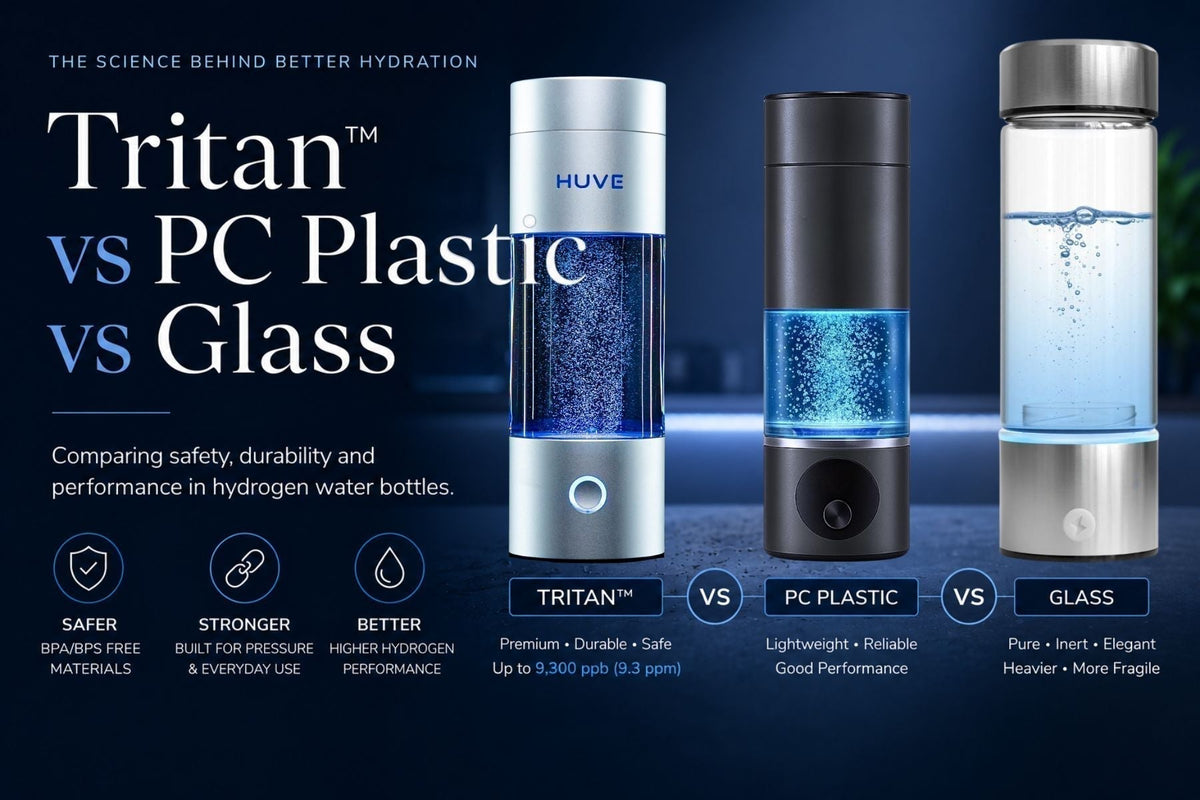
The three materials most commonly used in hydrogen water bottles are Tritan™, polycarbonate plastic and borosilicate glass. Each has advantages, but they are not equally suited to the demands of a portable, high-performance hydrogen water bottle.
Material Comparison Table
The material used in a hydrogen water bottle plays a major role in safety, durability, pressure capability and real-world practicality.
| Feature | Premium Tritan™ | Polycarbonate / PC | Borosilicate Glass |
|---|---|---|---|
| BPA-Free | Yes | Not always | Yes |
| BPS-Free | Yes | Not always | Yes |
| Impact Resistance | Excellent | Very good | Poor |
| Pressure Capability | Excellent | Very good | Fair |
| Weight | Light | Light | Heavy |
| Shatter Resistant | Yes | Yes | No |
| Travel Friendly | Excellent | Very good | Poor |
| Long-Term Durability | Excellent | Good | Fair |
| Premium Appearance | Excellent | Good | Very good |
| Overall Suitability for Hydrogen Bottles | Excellent | Very good | Fair |
PC Plastic: Strong, but not the premium choice
Polycarbonate, commonly called PC plastic, is used in many reusable bottles because it is strong, lightweight and relatively inexpensive.
Its impact resistance and ability to tolerate pressure can make it suitable for hydrogen water bottles. However, not every polycarbonate formulation is free from BPA or BPS. Buyers should therefore check the manufacturer's material specifications and safety certifications rather than assuming that every PC bottle is the same.
PC can also be a lower-cost material choice in products where affordability is prioritised over long-term material confidence. Although a well-manufactured and properly certified PC bottle can be acceptable, it is not generally considered the premium option for a high-performance hydrogen water bottle.
For consumers comparing products, the important question is not simply whether a bottle is described as "plastic." It is whether the manufacturer clearly identifies the plastic, confirms its food-contact suitability and provides evidence that it is free from substances such as BPA and BPS.
Tritan™: The premium polymer choice
Tritan™ is a premium copolyester known for its clarity, durability, impact resistance and suitability for food-contact products. It offers the glass-like appearance many consumers prefer without the weight and fragility of glass.
For a portable hydrogen water bottle, Tritan provides an excellent balance of safety, durability and pressure tolerance. Premium Tritan is lightweight, shatter-resistant and free from BPA and BPS, making it well suited to everyday use.
Its impact resistance is particularly valuable for a product that may be carried in a work bag, gym bag or luggage. A bottle intended for regular travel should be capable of handling everyday knocks and movement without the breakage risk associated with glass.
Tritan also allows manufacturers to create a transparent water chamber, so users retain the clean, premium appearance associated with glass while gaining the practicality of a high-quality polymer.
This combination is why the HUVE Perform V2 hydrogen water bottle uses a premium BPA/BPS-free Tritan™ chamber. It allows the bottle to remain practical for daily use while supporting the pressure requirements involved in producing high levels of dissolved molecular hydrogen.
Glass: Premium appearance, limited performance
Borosilicate glass has several genuine advantages. It is chemically inert, free from BPA and BPS, resistant to staining and does not retain flavours or odours. It can also provide a clean, premium appearance.
However, glass has practical limitations when used in a portable hydrogen water bottle.
Glass is rigid and brittle. It does not flex under pressure in the same way a suitable high-quality polymer chamber can. Because molecular hydrogen is generated inside the sealed chamber during electrolysis, the bottle must be engineered to manage internal pressure safely and consistently.
The pressure capability of any bottle ultimately depends on its complete engineering—not only the chamber material. Nevertheless, the brittleness of glass may restrict the design options available for higher-pressure hydrogen generation.
Glass bottles are also heavier and more vulnerable to cracking or shattering if dropped, knocked or exposed to sudden temperature changes. This can make them less practical for travel, training, commuting and regular use outside the home.
For a low-output desktop-style product, glass may be an acceptable option. For a portable hydrogen water bottle designed for everyday use, its premium appearance must be weighed against its fragility, weight and pressure limitations.
Why pressure capability matters
During an electrolysis cycle, molecular hydrogen gas is produced before dissolving into the water. A properly engineered sealed bottle can help retain that hydrogen and support a meaningful dissolved concentration.
This means the chamber must do more than hold water. It must form part of a complete pressure-based system that includes the base, seals, cap and pressure-management design.
A bottle's material does not determine hydrogen performance on its own. Electrolysis technology, electrode quality, water volume, cycle time, seals and overall engineering also matter. However, the chamber material can influence how safely and practically the complete product supports pressurised operation.
Which material is best for everyday use?
For most people choosing a portable hydrogen water bottle, premium Tritan offers the strongest overall balance.
- It is lighter and less fragile than glass.
- It provides excellent impact resistance.
- It can deliver a premium, transparent appearance.
- Premium formulations are free from BPA and BPS.
- It is suitable for pressure-based bottle designs.
- It is practical for work, travel, training and daily hydration.
Polycarbonate can still provide good strength and pressure capability, but buyers should confirm its exact formulation and safety certifications. Glass offers chemical inertness and visual appeal but is heavier, breakable and generally less practical for a pressurised portable bottle.
Where HUVE Perform V2 lands on materials
HUVE Perform V2 uses premium BPA/BPS-free Tritan because it supports the core purpose of the product: consistently producing a meaningful dose of dissolved molecular hydrogen in a compact, durable and practical bottle.
The Tritan chamber is paired with an anodised aluminium exterior and PEM/SPE electrolysis technology. This creates a design that balances verified hydrogen performance with portability, durability and a refined everyday appearance.
HUVE does not select materials based on appearance alone. Material choice must support the bottle's safety, engineering, performance and intended use.
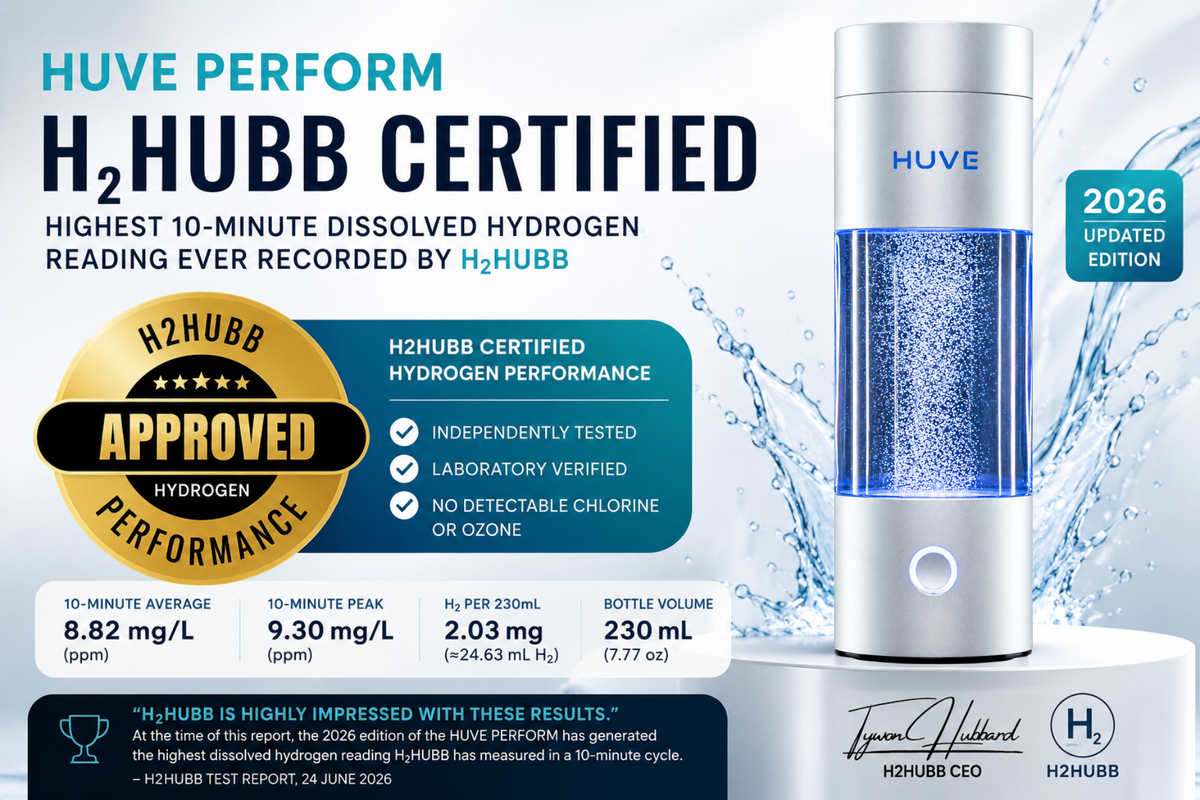
Explore HUVE Perform V2 and its independently tested hydrogen performance.
Final verdict
There is no single perfect bottle material for every application. Glass may suit someone who prioritises chemical inertness and intends to use the bottle carefully at home. Properly certified polycarbonate may suit products where affordability is important.
For a premium portable hydrogen water bottle, however, Tritan offers the most complete combination of safety, clarity, durability, impact resistance, light weight and pressure suitability.
That is why HUVE considers premium BPA/BPS-free Tritan the best overall material for a hydrogen water bottle designed for reliable everyday use.
Frequently Asked Questions
What is the best material for a hydrogen water bottle?
For a portable, high-performance hydrogen water bottle, premium BPA/BPS-free Tritan offers an excellent overall balance of durability, safety, impact resistance, low weight and suitability for pressure-based designs.
Is Tritan the same as ordinary plastic?
No. Tritan™ is a branded copolyester designed for applications including food-contact products. It is known for its glass-like clarity, durability and impact resistance. Premium Tritan is manufactured without BPA or BPS.
Is Tritan BPA-free and BPS-free?
Premium Tritan is manufactured without BPA or BPS. Consumers should still confirm the material identified by the bottle manufacturer and review any available product safety information.
Is polycarbonate safe for a hydrogen water bottle?
Properly manufactured food-contact polycarbonate can provide good strength and pressure capability. However, not every PC formulation is necessarily BPA-free or BPS-free. Buyers should look for clear material disclosures and relevant safety certifications.
Is glass better than plastic for hydrogen water?
Not necessarily. Glass is chemically inert and can look premium, but it is heavier, fragile and less practical for a portable pressurised bottle. A premium polymer such as Tritan can offer a better balance of durability, portability and pressure suitability.
Can a glass hydrogen water bottle break under pressure?
Any pressurised bottle must be properly engineered and used according to its instructions. Glass is rigid and brittle, so damage, manufacturing defects, sudden temperature changes or incorrect use may increase the risk of cracking or breakage.
Does the bottle material determine hydrogen concentration?
No. Material is only one part of the complete system. Hydrogen concentration is also affected by the electrolysis technology, electrode quality, chamber volume, pressure management, seals, water conditions and cycle time.
Why are hydrogen water bottles pressurised?
Molecular hydrogen gas is generated inside the bottle during electrolysis. A properly engineered sealed system can help retain the hydrogen and allow more of it to dissolve into the water rather than escaping immediately.
Is Tritan suitable for travelling?
Yes. Tritan is lightweight, impact-resistant and shatter-resistant, making it more practical for commuting, gym bags and travel than glass. The complete bottle should still be protected from severe impacts and handled according to the manufacturer's instructions.
What material does HUVE Perform V2 use?
HUVE Perform V2 uses a premium BPA/BPS-free Tritan™ water chamber together with an anodised aluminium exterior. This construction is designed to provide durability, portability and a premium appearance for daily use.